
Veterinary Laser Therapy Equipment: What Veterinary Clinics Should Know
Oct. 12, 2026
For veterinary clinics/hospitals, laser therapy is becoming a practical option for managing pain, inflammation and tissue recovery without adding another invasive procedure to the treatment plan. But choosing veterinary laser therapy equipment is not simply about selecting a high-power laser. Wavelengths, treatment depth, pulse control, handpiece design and the types of animals treated all matter.
This guide explains the key points veterinary hospitals, rehabilitation centers and equipment distributors should consider when selecting a veterinary diode laser system.
What Is Veterinary Laser Therapy Equipment?
Veterinary laser therapy equipment uses controlled laser light to deliver energy to targeted tissues. In veterinary practice, it can be incorporated into treatment and rehabilitation programs for musculoskeletal problems, wounds, dermatological conditions, oral conditions and post-surgical recovery.
Unlike surgical lasers used to cut or coagulate tissue, a veterinary therapy laser is intended for non-invasive therapeutic applications. The treatment approach can therefore be integrated into routine clinical care without creating an additional surgical wound.
Why Do Veterinary Clinics Use Laser Therapy?
Veterinary patients may require pain and inflammation management for a wide range of conditions. Laser therapy can be used as part of a broader treatment protocol when the veterinarian considers it appropriate.
Common applications include:
Arthritis and other musculoskeletal disorders
Tendinopathy and soft-tissue injuries
Fracture recovery
Post-surgical rehabilitation
Surgical incisions and wound care
Burns and selected dermatological conditions
Gingivostomatitis and other oral conditions
Otitis and inflammatory conditions
For rehabilitation-focused practices, a veterinary laser therapy machine can also complement physiotherapy and other non-invasive treatment methods.
Why Does Wavelength Matter in Veterinary Laser Therapy?
One of the most important specifications when comparing veterinary laser systems is wavelength.
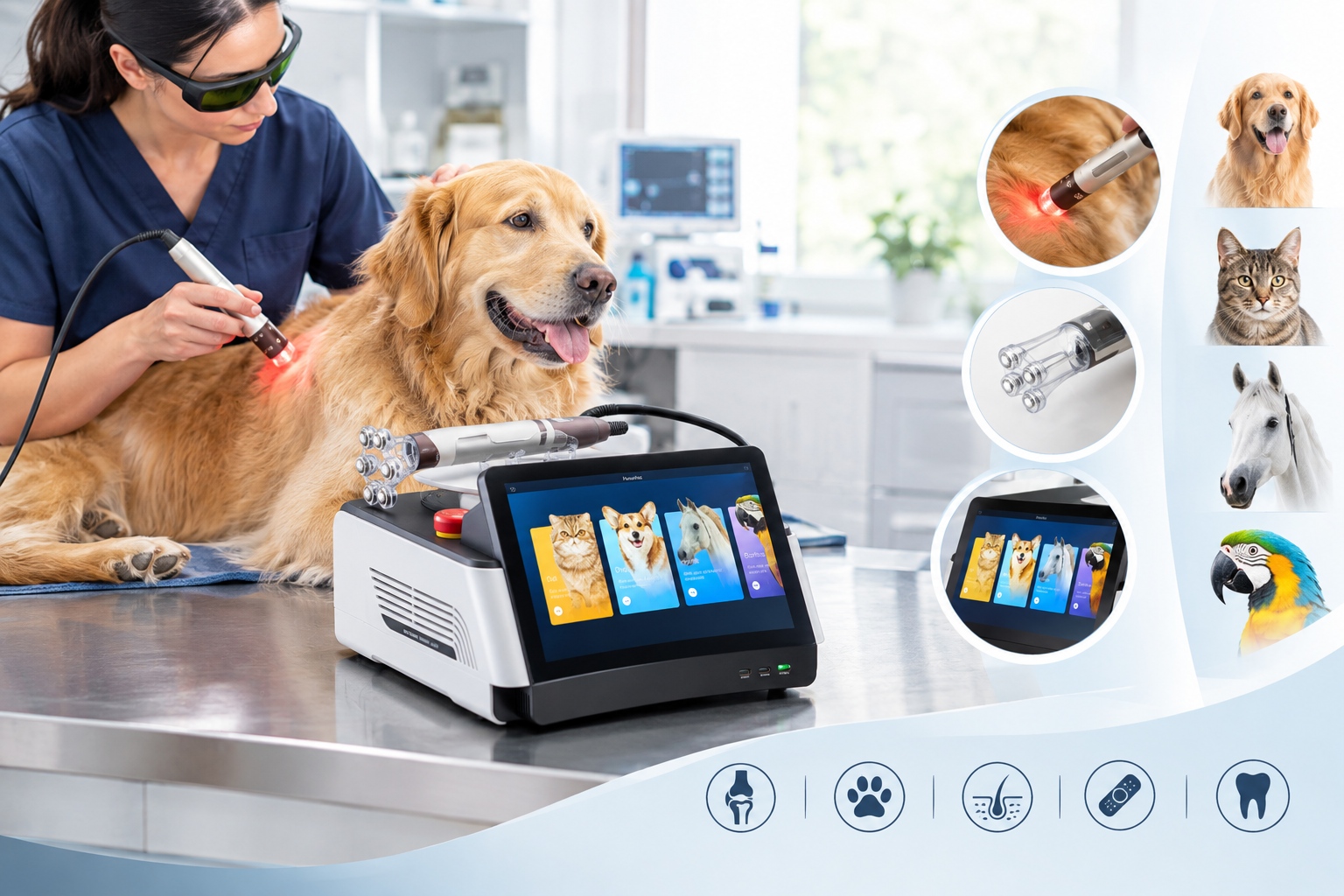
Different wavelengths interact with tissue differently and can be selected according to the intended treatment area and depth. The IVETWELL CURELIGHT series is available with combinations including 630 nm, 810 nm, 915 nm and 980 nm wavelengths.
The 630 nm wavelength is suitable for more superficial applications, while the 810 nm, 915 nm and 980 nm wavelengths are intended for applications requiring deeper tissue penetration.
For a veterinary hospital treating a broad range of conditions, a multi-wavelength veterinary laser provides greater treatment flexibility than a system limited to a single wavelength.
What Is ISP Super-Pulse?
Deep tissue treatment creates a practical challenge: delivering sufficient laser energy while managing heat accumulation.
The IVETWELL system includes Intense Super-Pulse (ISP) technology. According to the product specification, ISP is designed to provide high-energy pulses for deeper penetration while limiting excessive heat accumulation.
This feature can be particularly relevant when veterinary professionals are treating areas such as joints, tendons and other deeper musculoskeletal tissues.
What Is Dynamic Therapy?
Veterinary patients do not all respond to treatment in the same way. The treatment parameters required for a small superficial area may differ from those used for a larger or deeper treatment area.
The IVETWELL system incorporates Dynamic Therapy, which automatically adjusts treatment parameters according to the selected treatment requirements and patient condition.
For busy veterinary practices, practical treatment control can help make laser therapy easier to incorporate into an existing clinical workflow.
Is Veterinary Laser Therapy Suitable for Dogs and Cats?
Yes. Veterinary laser therapy equipment can be used for both dogs and cats when the treatment is clinically appropriate.
The IVETWELL veterinary diode laser system is also designed for exotic animals, including reptiles and birds. This makes it relevant not only to general companion-animal practices but also to specialty clinics and veterinary hospitals treating multiple species.
The actual treatment parameters should always be selected according to the animal, condition, treatment area and veterinary professional's protocol.
What Should Veterinary Clinics Consider Before Buying a Laser Therapy Machine?
For a veterinary hospital or rehabilitation center, several practical factors are worth checking before purchasing:
1. Wavelength configuration
A multi-wavelength system can provide greater flexibility for different tissue depths and treatment applications.
2. Treatment control
Look for adjustable operating modes and treatment parameters that can accommodate different clinical requirements.
3. Handpiece options
Large treatment areas and localized trigger-point applications may require different handpiece configurations.
4. Optical fiber durability
The optical fiber is an important working component. A durable anti-break design can be useful for regular clinical operation and repeated positioning.
5. User interface
A clear touchscreen interface can make parameter selection and daily operation more straightforward for veterinary staff.
6. Animal coverage
If a clinic treats dogs, cats and exotic animals, choosing a system designed for multiple species may provide better long-term value.
IVETWELL Veterinary Diode Laser System
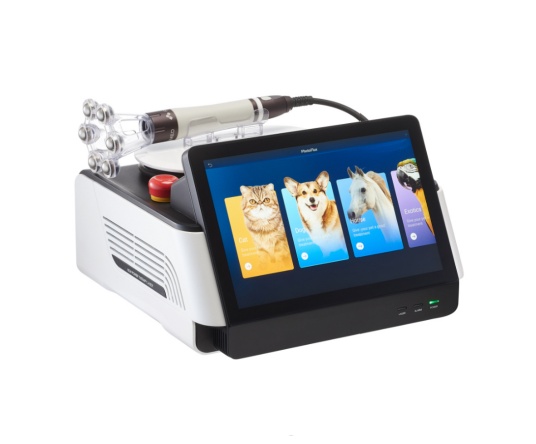
The IVETWELL Veterinary Diode Laser System is available in the CURELIGHT F2, F3 and F4 configurations.
Depending on the model, the system combines 630 nm, 810 nm, 915 nm and 980 nm wavelengths. It supports CW and Repeat Pulse operation, with adjustable pulse duration and repetition rate.
The system uses a 10.1-inch true-color Android touchscreen, medical optical fiber with an SMA905 connector and two optional handpieces for different treatment applications.
Its compact 7 kg design also makes it practical for veterinary clinics where treatment equipment needs to be moved or shared between consultation, rehabilitation and treatment areas.
Who Is Veterinary Laser Therapy Equipment For?
A professional veterinary laser system can be considered by:
Small animal veterinary clinics
Animal hospitals
Veterinary rehabilitation centers
Pet surgery and specialty centers
Exotic animal clinics
Veterinary physiotherapy practices
Veterinary medical equipment distributors
Veterinary equipment wholesalers
For distributors, a multi-purpose veterinary laser therapy machine for dogs, cats and exotic animals can address a wider range of end-user requirements and applications.
Choosing a Veterinary Laser Therapy Equipment Supplier
When sourcing veterinary laser equipment internationally, buyers should look beyond the basic laser specification. Wavelength configuration, treatment modes, fiber construction, handpiece options, animal coverage and after-sales technical support can all influence the suitability of the equipment for a particular market.
IVETWELL supplies veterinary medical equipment for international veterinary clinics, hospitals and distributors. The CURELIGHT veterinary diode laser series is designed for non-invasive veterinary laser therapy, with multi-wavelength configurations and treatment functions for a range of clinical and rehabilitation applications.
If you are looking for a veterinary laser therapy equipment supplier, veterinary diode laser system, or veterinary laser therapy machine for dogs and cats, contact IVETWELL for product specifications and quotation support.
Previous: None
Next: Veterinary Blood Pressure Monitor for Animal Hospitals