
Veterinary Blood Pressure Monitor FAQ
Oct. 07, 2026
Choosing a veterinary blood pressure monitor is not simply about getting a blood pressure reading. For veterinary clinics and animal hospitals, the right NIBP monitor should be practical for dogs and cats, easy to use during anesthesia and critical care, and flexible enough for everyday patient monitoring. Below are some of the most common questions veterinarians and veterinary equipment buyers ask before choosing a veterinary BP monitor.
How do you measure blood pressure in dogs?
Blood pressure in dogs is commonly measured using a non-invasive blood pressure (NIBP) monitor with an appropriately sized cuff.
The cuff is normally placed around a limb or the tail, depending on the patient's size, condition and the clinic's measurement protocol. Correct cuff selection and consistent positioning are important because an unsuitable cuff or measurement position can affect the reading.
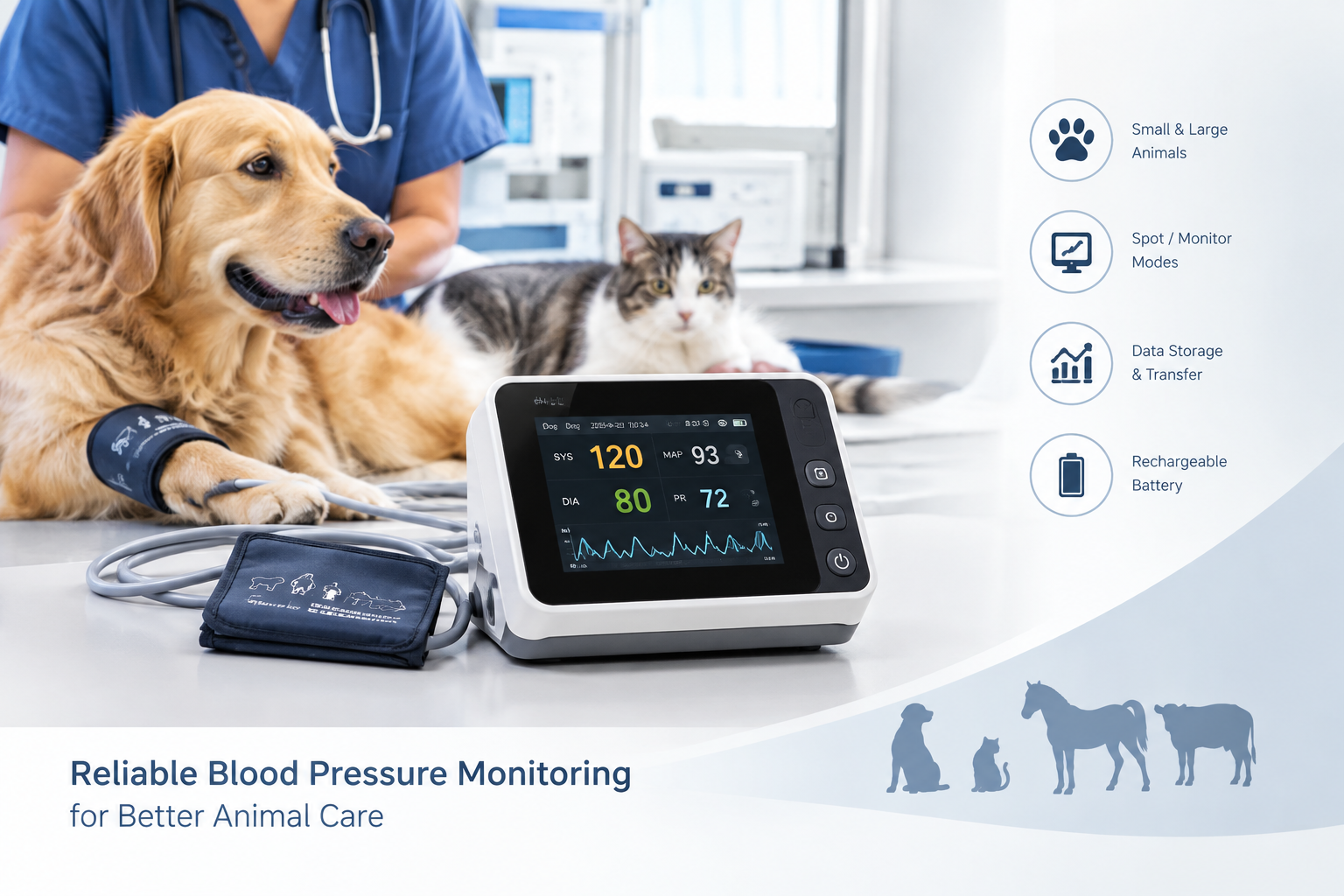
For routine clinical monitoring, a veterinary blood pressure monitor for dogs can provide systolic blood pressure (SYS), diastolic blood pressure (DIA), mean arterial pressure (MAP) and pulse rate.
How do you measure blood pressure in cats?
The process is similar to blood pressure measurement in dogs, but cats can be more sensitive to handling and clinical surroundings.
A suitable cuff should be selected according to the animal's size, and the patient should be allowed to settle when the clinical situation permits. Repeated measurements can help veterinarians assess whether a reading is consistent rather than relying on a single result.
A dedicated cat blood pressure monitor or veterinary NIBP system is commonly used for non-invasive monitoring in veterinary clinics and hospitals.
What is NIBP in veterinary medicine?
NIBP stands for Non-Invasive Blood Pressure.
In veterinary medicine, NIBP monitoring measures blood pressure without inserting a catheter into the animal. It is widely used for routine examinations, anesthesia monitoring, surgery, emergency care and postoperative observation.
A veterinary NIBP monitor is particularly useful when blood pressure needs to be checked repeatedly without invasive arterial monitoring.
What blood pressure monitor is used for dogs?
Veterinary clinics generally use a dedicated veterinary blood pressure monitor or veterinary NIBP monitor designed for animal patients.
Compared with a standard human blood pressure monitor, veterinary equipment should be suitable for different animal sizes and provide appropriate cuff options and measurement settings.
For clinics treating both cats and dogs, a monitor with a broad patient range can reduce the need for separate devices.
Can a veterinary BP monitor be used during anesthesia?
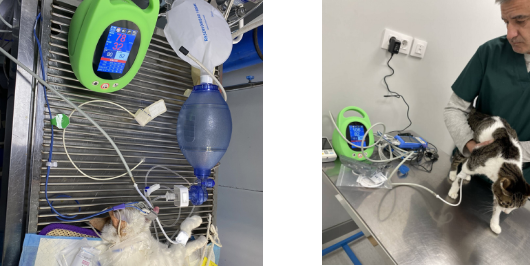
Yes. Blood pressure monitoring is commonly incorporated into veterinary anesthesia and surgical monitoring.
A veterinary BP monitor for anesthesia can help the clinical team follow blood pressure trends during a procedure and identify changes that may require attention.
For anesthesia applications, a monitor with a dedicated monitoring mode and clear display can be particularly useful when repeated measurements are required.
What is the difference between Spot Mode and Monitor Mode?
Spot Mode is generally suitable when the veterinarian needs to obtain an individual blood pressure measurement.
Monitor Mode is designed for situations where measurements need to be taken repeatedly over a period of time, such as anesthesia, surgery or intensive patient observation.
The appropriate mode depends on the clinical workflow and monitoring requirements.
What should I look for when buying a veterinary blood pressure monitor?
Veterinary clinics and equipment distributors should consider:
Suitable cuff options for different animal sizes
SYS, DIA, MAP and pulse rate measurements
Spot and continuous/repeated monitoring functions
Easy-to-read display
Rechargeable battery for mobile use
Patient data storage
USB, Bluetooth or Wi-Fi connectivity
Portability for different treatment areas
For veterinary equipment distributors, compatibility with different clinic types and animal sizes can also be important when selecting a product for their market.
Is a portable veterinary blood pressure monitor useful for animal hospitals?
A portable veterinary blood pressure monitor can be useful when patients are treated in different areas of a hospital.
A lightweight rechargeable device can be moved between consultation rooms, operating rooms, emergency departments and recovery areas without requiring a fixed workstation.
What animals can a veterinary blood pressure monitor be used for?
The applicable animal range depends on the specific monitor, cuff configuration and manufacturer specifications.
For a clinic treating mainly companion animals, a veterinary blood pressure monitor for cats and dogs is often sufficient. Hospitals and distributors serving a wider range of patients may prefer equipment capable of supporting both small and larger animals.
Is IVETWELL Veterinary Electronic Sphygmomanometer suitable for veterinary clinics?
The IVETWELL Blood Pressure Monitor and Electronic Sphygmomanometer is designed for non-invasive blood pressure monitoring in veterinary clinical environments.
It supports Spot and Monitor modes and provides SYS, DIA, MAP and pulse rate measurements. The system also supports multiple animal IDs and USB, Bluetooth and Wi-Fi data transmission, making it suitable for veterinary clinics, animal hospitals and other professional veterinary settings.
Its portable design and rechargeable battery can also support use in different areas of a veterinary hospital.
Where can I buy a veterinary blood pressure monitor?
Veterinary clinics, animal hospitals, distributors and veterinary equipment wholesalers can contact IVETWELL for veterinary blood pressure monitoring equipment and product information.
For buyers looking for a veterinary blood pressure monitor supplier, the ivetwell Veterinary Electronic Sphygmomanometer provides a practical option for routine examinations, anesthesia monitoring and clinical patient care.
Previous: None
Next: Veterinary Blood Pressure Monitor for Animal Hospitals