
How to Choose the Right Veterinary Table for a Clinic or Animal Hospital
Sep. 25, 2026
In animal examination room, treatment area, grooming space, or operating room, the right veterinary table can make daily procedures easier, improve patient positioning, and help veterinary staff work more efficiently. However, different clinics need different table designs.
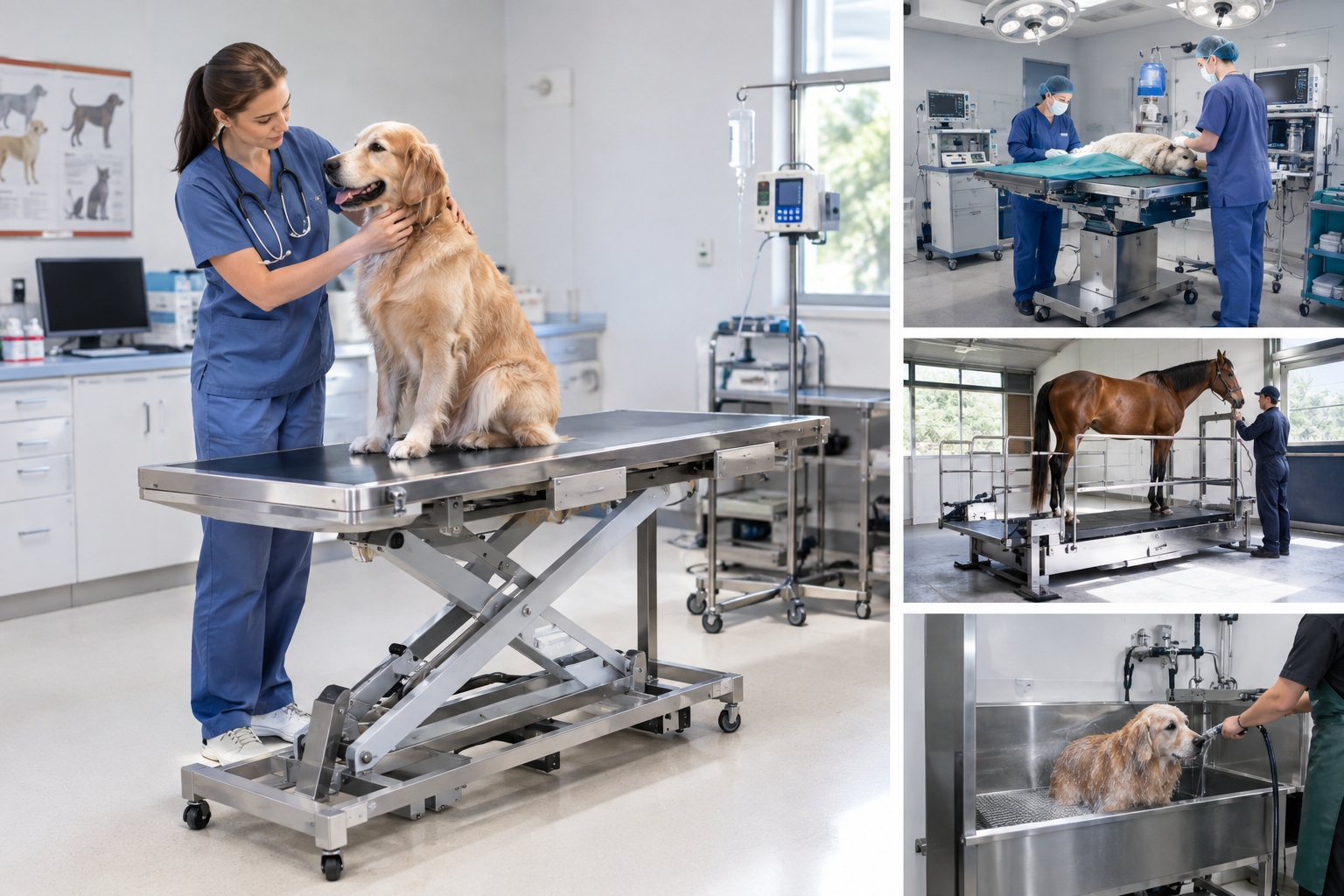
A small animal clinic may need a compact examination or treatment table, while an animal hospital, surgical center, or equine facility may require a larger and more specialized veterinary operating table.
This guide explains the main types of veterinary tables and the key points buyers should consider before placing an order.
What Is a Veterinary Table?
A veterinary table is medical equipment designed to support animals during examination, treatment, infusion, surgery, bathing, disinfection, or other clinical procedures.
Unlike a general-purpose worktable, a professional veterinary table is designed around the needs of veterinary staff and animal patients. Depending on the application, important features may include:
Stable construction for different animal sizes
Easy-to-clean working surfaces
Adjustable height or positioning
Drainage for wet procedures
Animal restraint or positioning options
Compatibility with veterinary accessories
Suitable working space for clinical procedures
For veterinary clinics and hospitals, the table should be selected according to the actual workflow rather than simply by appearance or price.
Main Types of Veterinary Tables
Veterinary Examination and Procedure Tables
A veterinary examination table is commonly used for routine examinations, vaccinations, injections, wound care, physical examinations, and other daily procedures.
For general small animal practices, a practical examination table should provide enough working space for dogs and cats while allowing veterinary staff to clean and disinfect the surface quickly.
For busy clinics, factors such as table stability, working height, surface material, and ease of cleaning can have a noticeable impact on everyday workflow.
2. Veterinary Operating Tables
A veterinary operating table is designed for surgical procedures where patient positioning and access are particularly important.
Depending on the design, veterinary operating tables may be used for:
General surgery
Soft tissue surgery
Orthopedic procedures
Abdominal procedures
Emergency surgery
Dental or specialized procedures
Height adjustment can also be important because surgeons and veterinary technicians may need different working positions during a procedure.
Electric and hydraulic adjustment systems are commonly considered when purchasing a veterinary surgery table. Electric systems can provide convenient powered adjustment, while hydraulic designs can offer height adjustment without relying on an electric lifting motor. The appropriate choice depends on the clinic's workload, available power supply, budget, and required positioning functions.
3. Dry and Wet Veterinary Tables
Not every veterinary procedure takes place in a dry examination room.
Wet veterinary tables are useful for procedures involving water, cleaning, bathing, or disinfection. Drainage becomes an important consideration because fluids should be removed efficiently from the working surface.
For pet hospitals, grooming facilities, rehabilitation centers, and animal care businesses, a suitable dry and wet veterinary table can help separate wet procedures from conventional examination and treatment work.
4. Animal Infusion Tables and Infusion Racks
During infusion therapy, the animal may need to remain in a stable and comfortable position for an extended period.
An animal infusion table can provide a dedicated area for intravenous treatment while an infusion rack helps organize fluid bags and related equipment.
For veterinary hospitals with a high number of hospitalized patients, having appropriate infusion equipment can make treatment areas more organized and easier for staff to manage.
5. Veterinary Anatomy Tables
Veterinary anatomy tables are designed for anatomy-related work, education,
research, and certain specialized applications.
These tables may be used by veterinary schools, research facilities, laboratories, and professional institutions that require a dedicated working surface for animal anatomy procedures.
The table should be selected according to the animal size, procedure requirements, drainage needs, cleaning process, and available working space.
6. Equine Veterinary Operating Tables
Large animals require a different approach to table design.
A veterinary operating table for equine applications needs to consider the size and weight of the animal, positioning requirements, operating-room space, and the specific procedures performed by the veterinary team.
Equine hospitals and large-animal surgical centers therefore should not simply select a table designed for dogs and cats. Load capacity, dimensions, stability, positioning, and the complete surgical workflow should be confirmed before purchasing.
IVETWELL's veterinary tables category includes a dedicated Veterinary Operating Tables for Equine product section, alongside tables for examination, infusion, anatomy, and dry/wet procedures.
What Should Veterinary Clinics Consider Before Buying?
For veterinary hospitals and clinics, several specifications deserve attention before requesting a quotation.
Animal Size and Application
Start with the animals treated in the facility.
A clinic primarily treating cats and small dogs may have very different requirements from a mixed-animal practice or equine hospital.
Consider:
Typical patient size
Maximum animal weight
Type of procedures
Examination or surgery frequency
Available operating-room space
The table should provide an appropriate safety margin for the largest animals routinely handled.
Table Material and Cleaning
Veterinary tables are exposed to body fluids, disinfectants, hair, dirt, and other contaminants.
A smooth, durable, easy-to-clean surface is therefore important for daily veterinary use. Buyers should also check corners, joints, drainage areas, and other locations where contamination or fluid accumulation could occur.
For clinics with frequent procedures, easy cleaning is not simply a convenience. It is part of maintaining an efficient clinical workflow.
Height Adjustment and Positioning
Veterinary staff members do not all work at the same height, and different procedures may require different working positions.
Depending on the table, height adjustment may be manual, hydraulic, or electric.
When comparing models, buyers should consider the actual frequency of adjustment rather than automatically choosing the most complicated configuration.
Stability and Load Capacity
A veterinary table needs to remain stable when an animal moves or when staff apply pressure during treatment.
For larger animals, this becomes even more important.
Distributors and veterinary equipment buyers should always confirm the manufacturer's load capacity, tabletop dimensions, lifting range, and structural specifications before placing an order.
FAQ
What type of veterinary table is suitable for a small animal clinic?
For clinics mainly treating dogs and cats, veterinary examination tables and procedure tables are commonly used for routine examinations and treatment. If the clinic performs frequent surgery, a dedicated veterinary operating table may be more appropriate.
What is the difference between a veterinary examination table and an operating table?
An examination table is mainly designed for routine examination and treatment, while a veterinary operating table generally provides additional features for surgical positioning, height adjustment, stability, drainage, or other operating-room requirements.
Are veterinary tables suitable for large animals?
Some veterinary tables are specifically designed for large-animal applications. Equine and other large-animal facilities should confirm the table's dimensions, load capacity, positioning functions, and operating-room requirements before purchasing.
Can distributors buy veterinary tables in bulk?
Yes. Veterinary equipment distributors and stockists can purchase suitable models for their local markets. When requesting a quotation, it is helpful to provide the expected quantity, destination market, preferred specifications, and any branding or packaging requirements.
If you are sourcing veterinary examination tables, veterinary operating tables, animal treatment tables, infusion tables, or equine veterinary tables, contact IVETWELL with your required model, quantity, animal type, and destination market for product details and a quotation.
IVETWELL Animal Medical Equipment Supplier
Email: info@ivetwell.com
WhatsApp: +86 15311772890
Previous: None
Next: Veterinary Doppler BP System: Applications, Models and Buying Guide