
Animal Medical Equipment Supplier

Choose EtCO2 Monitoring for Veterinary Anesthesia Safety

Jul. 14, 2026

In modern veterinary medicine, monitoring a patient’s vital signs goes far beyond just watching a heart rate monitor. While pulse oximetry (SpO2) tells you about oxygenation, it often acts as a lagging indicator. By the time SpO2 drops, a patient may have already been in respiratory distress for minutes.
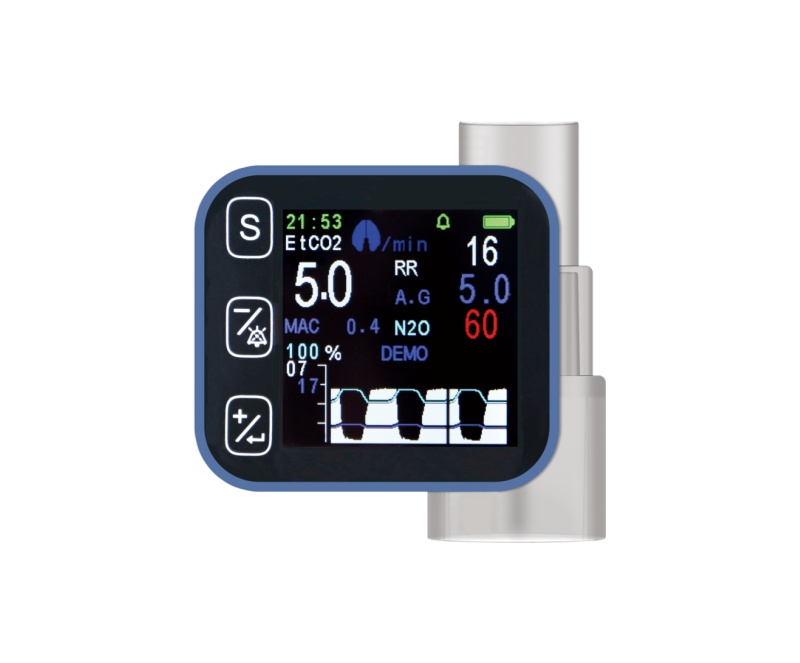
At iVetwell, our core viewpoint is clear: Capnography (EtCO2 monitoring) is the most critical tool for early detection of anesthetic complications. It provides a real-time window into the patient’s ventilation, perfusion, and metabolism, allowing veterinarians to intervene long before a crisis occurs.

Real-World Scenarios: When EtCO2 Saves Lives

To understand the value of an Ivetwell EtCO2 monitor, consider these common clinical scenarios:

  1. The Apneic Patient: During a routine feline dental cleaning, the patient suddenly stops breathing due to deep anesthesia. An SpO2 sensor might stay at 98% for several minutes due to pre-oxygenation. However, the iVetwell capnograph will show a "flat line" immediately, alerting the technician to provide manual ventilation instantly.

  2. Accidental Extubation: During a positional change for a canine orthopedic surgery, the endotracheal tube shifts. The iVetwell monitor detects the loss of the CO2 waveform instantly, confirming the tube is no longer in the trachea before the patient's heart rate even begins to climb.

  3. Evaluating CPR Effectiveness: In emergency resuscitation, EtCO2 levels are the most reliable indicator of chest compression quality. A rise in EtCO2 signals Return of Spontaneous Circulation (ROSC), guiding the vet team with precision.

Mainstream vs. Sidestream: Which Does Your Clinic Need?

A common question we receive at iVetwell is whether to choose Mainstream or Sidestream technology.

  • Mainstream EtCO2: The sensor is placed directly at the end of the endotracheal tube. This offers the fastest response time and is ideal for large animals or stable surgical environments.

  • Sidestream EtCO2: A small pump draws a gas sample through a tiny tube to the monitor. This is the "gold standard" for smaller patients (like kittens or exotic pets) because it doesn't add "dead space" or heavy weight to the breathing circuit.

iVetwell provides versatile solutions that cater to both needs, ensuring high-precision CO2 sampling regardless of the patient's size.


Industry FAQ: Expert Answers to Common Veterinary Capnography Questions

To help clinics optimize their practice, we’ve compiled the most frequent technical inquiries regarding veterinary EtCO2 monitors.

1. What is a normal EtCO2 range for dogs and cats under anesthesia?

Answer: The normal range for most domestic animals is 35 to 45 mmHg. If the reading climbs above 45 mmHg (Hypercapnia), the patient is likely hypoventilating. If it drops below 35 mmHg (Hypocapnia), it may indicate hyperventilation, decreased cardiac output, or a leak in the breathing system.

2. Why is my EtCO2 reading zero even though the heart is beating?

Answer: A zero reading (flat line) usually indicates one of three things: total airway obstruction, esophageal intubation (the tube is in the stomach, not the lungs), or a disconnected breathing circuit. iVetwell monitors feature instant-alarm technology to distinguish between these technical errors and physiological emergencies.

3. Does EtCO2 monitoring replace SpO2?

Answer: No. They are complementary. SpO2 measures oxygenation (the "delivery"), while EtCO2 measures ventilation (the "elimination"). You need both for a comprehensive safety profile. However, EtCO2 is a much faster indicator of respiratory failure than SpO2.

4. How often should veterinary EtCO2 sensors be calibrated?

Answer: Most high-quality sensors, like those integrated into iVetwell veterinary patient monitors, require "zeroing" before each use and a full calibration check every 6–12 months. Our "Plug-and-Play" CO2 modules are designed for stability and minimal maintenance to reduce clinic downtime.

5. Can I use a human EtCO2 monitor for animals?

Answer: While the physics are the same, veterinary-specific monitors like those from iVetwell are calibrated for different respiratory rates and tidal volumes. Specifically, small animals have much higher respiratory rates and lower tidal volumes than humans; a human monitor may fail to accurately capture these rapid, shallow breaths.


Why Choose iVetwell for Your Veterinary Practice?

As a dedicated manufacturer of animal medical equipment, iVetwell understands the unique challenges of the veterinary surgical suite. Our EtCO2 monitors are designed with:

  • High Sensitivity: Accurate readings even for patients under 2kg.

  • Rugged Durability: Built to withstand the fast-paced hospital environment.

  • Seamless Integration: Our EtCO2 modules work perfectly with our full range of multi-parameter patient monitors.

Final Thought: Safety in veterinary anesthesia is not a luxury; it is a standard of care. By choosing iVetwell, you are investing in the most reliable early-warning system available for your patients.

For more information on our latest capnography technology