
Veterinary Blood Pressure Monitors: Doppler vs Oscillometric, and How to Choose
Nov. 25, 2026
Quick answer: For general veterinary practice, an oscillometric NIBP monitor is a practical choice when you need automated SYS, DIA, MAP and pulse readings. A Doppler blood pressure system is particularly useful for feline patients, small animals and anesthesia monitoring, where direct detection of blood flow and operator-controlled measurement are valuable. The best choice depends on your patient population, clinical workflow and cuff selection.
We get asked for "the most accurate veterinary blood pressure monitor" fairly often. Our first question is usually about cuff sizes and the patients in the room. A monitor with a bright touchscreen still gives useless numbers if the bladder is too narrow for the dog on the table, and no display tells you that.
This guide is for veterinarians, hospital purchasing staff and equipment distributors comparing two different tools: oscillometric NIBP monitors and Doppler BP systems. We will keep it practical: what each method gives you, where readings go wrong, and what to confirm before an order goes out.
Doppler or oscillometric: what you actually get
Readings | SYS, DIA, MAP and pulse rate | Mainly systolic, detected from blood flow |
Day-to-day use | Wellness exams, internal medicine, ICU, repeated checks | Doppler systems are commonly used in feline blood pressure assessment, anesthesia monitoring and selected small-patient applications. |
Operator skill | Lower, once the cuff fits | More, probe position and technique matter |
Feedback | Numeric display, stored patient data | Audible flow signal plus pressure display |
Consumables to budget | Cuffs, tubing | Cuffs, probe, gel, batteries |
If your week is mostly wellness exams and internal medicine, an oscillometric monitor covers it. If you run a busy anesthesia schedule or see cats that barely tolerate a cuff, a Doppler is the tool people reach for. Some hospitals end up with both, because the two methods solve different problems.
Start with the cuff, not the spec sheet
The cuff width should generally be around 30%–40% of the circumference of the limb or tail at the measurement site. Always follow the device manufacturer's cuff-sizing instructions and measure the site before selecting a cuff.Too narrow and the reading runs high; too wide and it runs low. The same cuff may fit some dogs and cats, but selection should always be based on the measured circumference of the limb or tail, not the animal's species alone.
A few things worth checking in practice:
For dogs, confirm whether your protocol uses a limb or the tail, and stock cuffs for both if you switch between them.
For cats, Allow the animal to acclimate in a quiet room for 5–10 minutes when the clinical situation permits. Discard the first reading and obtain 5–7 consecutive, consistent measurements. Record the cuff size, measurement site and patient position for future comparisons.
Ask the supplier for the full cuff set in writing, then price replacements separately. Cuffs are the part clinics lose, soil and wear out first.
What tends to go wrong after installation
"The numbers jump around." Usually cuff fit, patient movement, or an inconsistent measurement site. Check those before assuming the monitor is faulty.
"The probe stopped working." Doppler probes are delicate. Ask how the probe is stored, whether gel is supplied, and whether a replacement can be shipped without returning the whole unit.
"We cannot get readings into our records." If the clinic uses practice management software, confirm data export and check compatibility before ordering, not after.
How to Choose a Veterinary Blood Pressure Monitor for Dogs and Cats
The right veterinary blood pressure monitor depends on the animals you treat, their size and temperament, and how often you need to take measurements. A monitor that works well for routine checks in large dogs may not be the most practical choice for a cat or a small patient under anesthesia.
Small dogs and cats
For small dogs and cats, cuff selection deserves particular attention. The cuff must fit the measurement site correctly, and the monitor needs to support the circumference range of your patients. Check the available cuff sizes before ordering, especially if your clinic regularly treats toy breeds, kittens or smaller patients.
Cats can become stressed during handling, which may affect blood pressure readings. A quiet measurement area, time to settle and a consistent measurement routine can make a difference. Doppler systems are commonly used in feline blood pressure assessment, while a suitable oscillometric monitor can also be used when its performance is appropriate for the patient and clinical situation.
Large dogs
Large dogs need cuffs that match their limb or tail circumference. Before purchasing a veterinary BP monitor, check the maximum cuff size included in the standard package and whether larger cuffs are available separately.
Also consider the monitor's intended patient range and whether it can provide consistent readings with the cuff sizes your clinic needs. If you regularly examine different breeds, buying a complete cuff set is usually more practical than relying on one or two standard sizes.
Feline patients
For clinics that see a high number of cats, handling time and measurement technique matter as much as the monitor itself. Doppler blood pressure monitors are a common option for feline patients because they allow the operator to listen for blood flow while controlling cuff inflation and deflation.
Oscillometric monitors offer a more automated approach and can provide additional parameters such as systolic, diastolic and mean arterial pressure. The choice should depend on the device's suitability for cats, the measurement protocol and the experience of the veterinary team.
Anesthesia monitoring
Blood pressure monitoring during anesthesia requires a different approach from occasional measurements during routine examinations. The team needs to check readings at appropriate intervals, recognize changes promptly and have a measurement method that fits the procedure.
An oscillometric NIBP monitor can be useful when repeated numerical readings and multiple blood pressure parameters are required. Doppler systems are another option, particularly when monitoring systolic pressure in smaller patients or when an audible blood-flow signal is useful.
Before purchasing, check the available monitoring modes, measurement intervals, power supply and battery performance. For longer procedures, a backup power option or an alternative monitoring method is also worth considering.
The practical choice
If your clinic mainly handles dogs and cats during routine examinations, an oscillometric veterinary blood pressure monitor may be a practical starting point. If feline patients, small animals or anesthesia cases make up a large part of your workload, a Doppler system may be a useful addition.
For hospitals with a varied caseload, having both types available can provide greater flexibility. The important point is to match the monitor, cuff set and measurement method to the patients you actually see.
What to confirm before you place the order
For clinics:
Patient size range and the cuff sizes actually included
Whether you need SYS/DIA/MAP and pulse, or systolic only
Spot measurement versus repeated monitoring mode
Battery life and whether the unit runs on mains during long procedures
Warranty terms and where the unit would be serviced
For distributors and importers:
Voltage, plug type and documentation for the destination market
Applicable CE conformity documents for the specific device, plus the manufacturer's ISO 13485 certificate
A spare parts list with separate pricing: probes, cuffs, tubing
OEM/ODM options and minimum order quantity if you are building a private label
Lead time, and which configurations are held in stock
One more point that saves trouble later: check local registration requirements. Veterinary device rules vary by country, and the paperwork a supplier sends should match the market you are selling into.
What Should Veterinary Equipment Distributors Check Before Buying?
For veterinary equipment distributors, choosing a blood pressure monitor is not just about comparing specifications. The configuration, availability of replacement parts and level of after-sales support all affect whether a product is suitable for long-term distribution.
Before placing a bulk order, check the following points with the manufacturer.
Available models and configurations
Confirm which veterinary blood pressure monitor models are available and what each configuration includes. For example, an oscillometric NIBP monitor and a Doppler blood pressure system serve different clinical purposes. Make sure the product range covers the requirements of your target customers rather than relying on one model for every application.
Complete cuff kits and replacement accessories
Ask for a detailed list of the cuffs included in the standard package, including their size range. Check whether additional cuffs, connecting tubes and other accessories can be ordered separately.
Cuffs are frequently handled, cleaned and replaced in veterinary clinics. A reliable supply of replacement accessories makes it easier for distributors to support customers after the initial sale.
Product manuals and technical documentation
Request the user manual, product specifications, maintenance instructions and applicable conformity documentation before confirming an order.
For international distribution, check that the documents match the exact model and configuration being supplied. Local registration and import requirements should also be reviewed for the destination market.
OEM, ODM and private-label availability
If you sell under your own brand, ask whether the manufacturer supports OEM or ODM services. Confirm which parts can be customized, such as the logo, product housing, packaging, user manual and language options.
It is also worth checking the minimum order quantity for customized products and whether the same configuration can be supplied consistently for repeat orders.
Spare probes and accessory supply
For Doppler systems, ask about replacement probes, probe cables and compatible accessories. Check their individual prices and whether they can be shipped separately.
For oscillometric monitors, confirm the availability of replacement cuffs, tubing, power adapters and batteries. Distributors should be able to purchase commonly needed spare parts without replacing the entire monitor.
Warranty and after-sales technical support
A warranty period alone does not tell you how a manufacturer handles problems. Ask how technical issues are diagnosed, whether replacement parts are available and what support is provided if a device needs repair.
For overseas distributors, remote technical assistance and clear communication are particularly important. Confirm the warranty coverage and service process in writing.
MOQ, pricing and bulk order lead time
Before preparing a quotation for your customers, confirm the minimum order quantity, standard production lead time and whether different models can be combined in one order.
Also ask whether the manufacturer keeps standard configurations in stock and how long repeat orders usually take. This helps distributors plan inventory and avoid promising delivery dates they cannot meet.
Before you finalize the supplier
A suitable veterinary blood pressure monitor supplier should be able to provide clear specifications, complete accessory lists, relevant technical documents and a workable after-sales arrangement.
If you are comparing manufacturers, request a quotation based on the exact model, cuff configuration, order quantity and destination market. Comparing complete configurations gives you a much clearer picture of the actual purchasing cost than comparing the monitor price alone.
Two configurations worth comparing
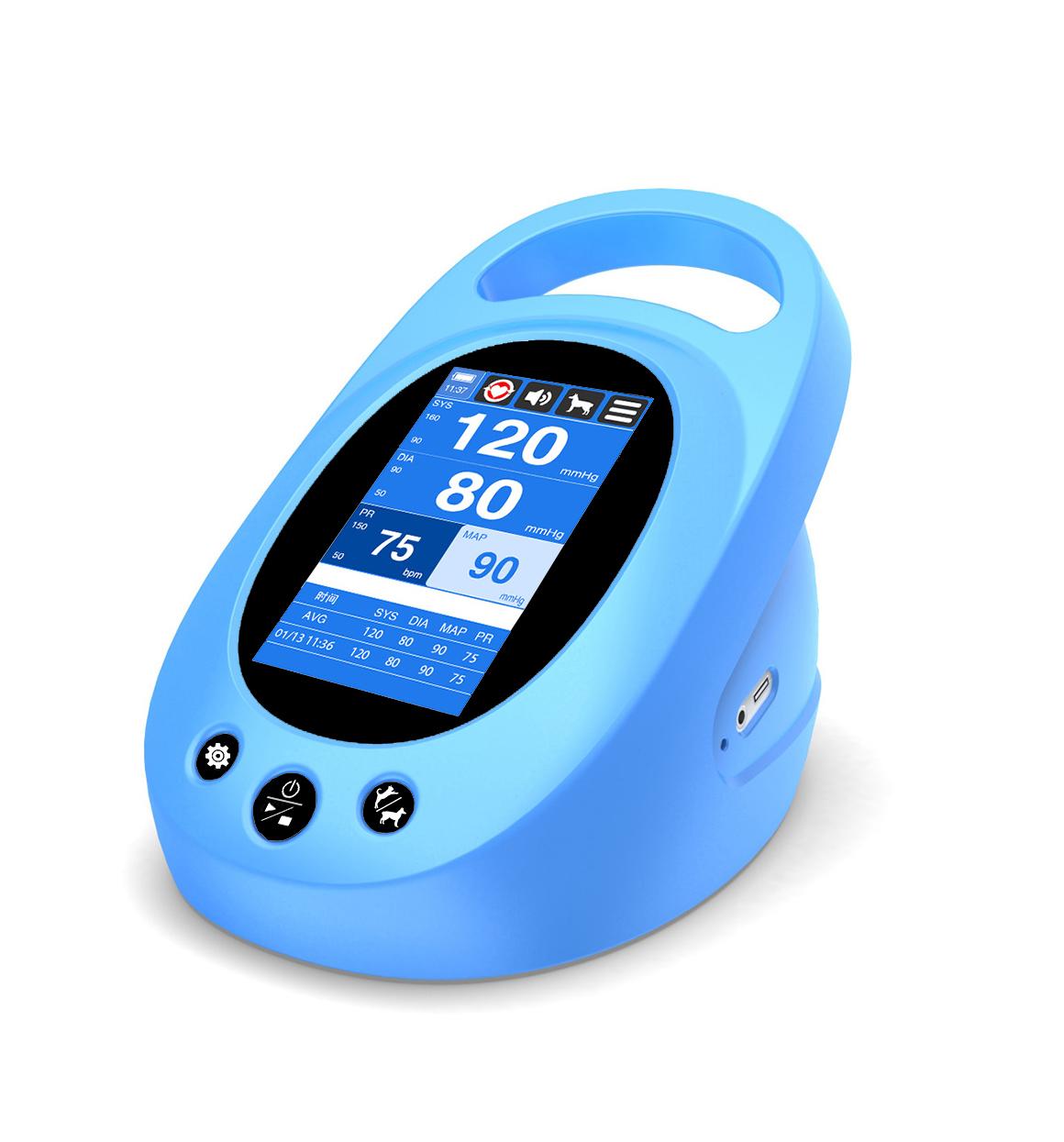
IVT-VET800 (oscillometric NIBP). A 4.3-inch IPS touchscreen, Spot and Monitor modes, SYS/DIA/MAP and pulse rate, storage for up to 50 animal IDs, and USB, Bluetooth and Wi-Fi transfer. It is lightweight and runs on a rechargeable battery. See the full specification. This suits clinics and hospitals that need repeatable readings and a record trail.
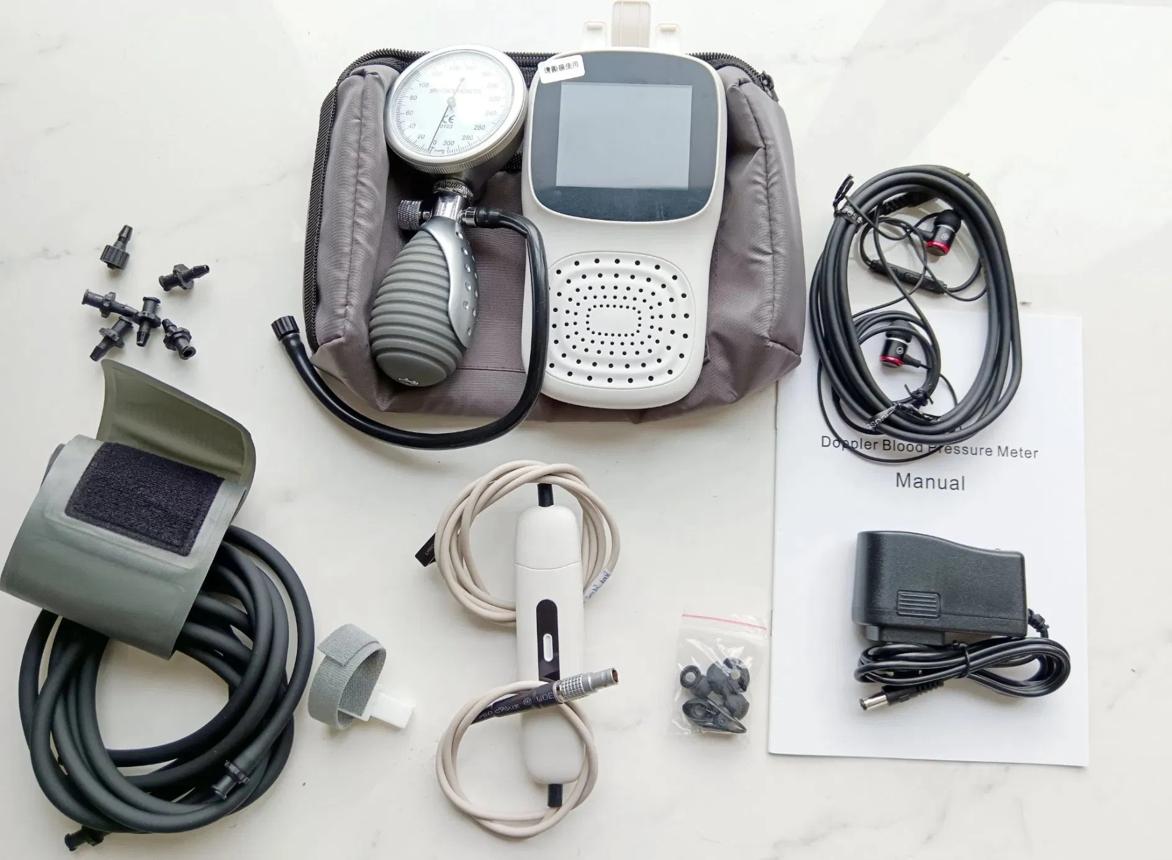
IVT-3000 series (Doppler). An 8 MHz vascular probe, 0-300 mmHg measuring range, pressure accuracy of ±3.75 mmHg, and both rechargeable battery and AC power. The IVT-3000D is the straightforward configuration; the IVT-3000C adds a color waveform touchscreen. Compare the two models. This suits anesthesia, feline work, and farm or mobile visits where portability matters.
Still unsure? Tell a supplier your case mix, dogs, cats, exotics or horses, and ask which cuff set they would ship with it. That answer usually settles the question faster than a comparison chart.
Short answers to common questions
Can a human blood pressure monitor be used on a dog?
It is not a good idea. Human cuffs and algorithms are built around human arms; veterinary patients need animal-sized cuffs and ranges suited to their physiology.
Is Doppler more accurate than oscillometric?
They do different jobs. Doppler detects flow and is widely used in anesthesia and small patients; oscillometric provides the full set of parameters in conscious animals. In practice, accuracy depends as much on cuff fit and technique as on the device.
How often should cuffs be replaced?
When the elastic weakens, the fastening stops gripping, or the bladder no longer holds pressure. Keep a spare set in each exam room.
What should I look for when buying a veterinary blood pressure monitor?
Choose a monitor based on animal size, cuff availability, measurement method, required BP parameters, data storage, power supply and after-sales support. For veterinary distributors, also check spare parts availability, warranty terms and OEM options.
Can veterinary blood pressure monitors be used for both dogs and cats?
Yes, some veterinary blood pressure monitors support both dogs and cats. However, the correct cuff size, measurement site and device performance for each species must be considered. Always follow the manufacturer's instructions and an appropriate veterinary measurement protocol.
What is a normal blood pressure reading for dogs and cats?
In calm, conscious dogs and cats, a typical normal systolic blood pressure is roughly 110–140 mmHg (though certain breeds, such as sighthounds, can naturally run slightly higher). Readings consistently above 160 mmHg across repeated calm measurements generally warrant investigating systemic hypertension, while systolic values below 80–90 mmHg indicate potential hypotension. Because patient stress ("white-coat effect") and improper cuff sizing can easily skew a single number, always interpret blood pressure alongside clinical signs and repeatable technique.
The practical next step
Tell us what animals you treat and how many rooms you monitor. We will suggest the configuration and the cuff set we would ship, not just the model with the longest feature list.
Email: info@ivetwell.com | WhatsApp: +86 153 1177 2890 |
Previous: None
Next: Veterinary Equipment List for a New Clinic: Checklist (With Budget)